
Visit Trade Store

Industry News – TfL modifies proposed changes due ‘summer 2023’

Direct vision standard

Last week Transport for London (TfL) released their Consultation Report detailing their findings regarding the forthcoming update to the HGV Safety Permit Scheme.  The report outlines two amendments after the completion of a detailed consultation.  

TfL consultation Report June 2023 states, ‘From October 2024 the minimum DVS rating will move to three stars. This will mean that zero to two star rated HGVs will now be required to have additional safety equipment.  Given the current Safe System measures were originally developed in 2018, we have reviewed what range of safety measures this should contain, reflecting new equipment and technologies available on the market since then”.  

Progressive Safety System

The next step will be for London Councils’ Transport and Environment Committee to consider TfL recommendations and make a decision about whether to accept their modified proposals for the Progressive Safety System (PSS). Subject to their decision, TfL aims to publish detailed technical specifications in summer 2023. TfL stated there are no plans to extend the HGV Safety Permit scheme to other vehicles as part of this proposal.  

Once the decision has been published, Motormax will be in a position to recommend specific solutions to ensure your fleet is compliant. In the meantime, please do stay in touch and sign up to our newsletter. 


Proposed changes to the HGV Safety Permit Scheme   

1. Camera Monitor Systems 

Proposed changes

Camera systems will be allowed to replace class four, five and six mirrors and they must cover and eliminate all remaining blind spots.  

Solution  

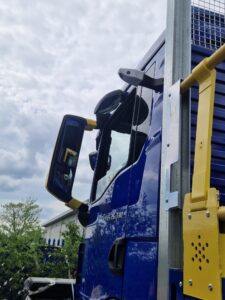
R46 approved camera solutions can be used to replace three of the compulsory indirect field of view mirror classes. Class ll main side view, Class lV Wide angle, Class V close proximity side view and Class Vl front blind spot. The use of cameras instead of mirrors can provide increased visibility to the driver through wider viewing angles and clearer night vision.
2. Moving Off Information Systems (MOIS) / Front Detection System 

Proposed changes

All vehicles must have a front sensor system that detects pedestrians or cyclists entering the blind spot area in front of the vehicle. Sensor systems must not be activated by street furniture, parked vehicles, must recognise vulnerable road users and must activate to a range of 2m along the complete length of the vehicle.  

Amendment to proposal

In response to concern about the practicality of sensors on articulated trailers given cabs use multiple trailers and the costs of installing, maintaining and licensing across multiple trailers, this element has been amended. “We understand the issues with articulated trailers and having carefully listened to the concerns of industry. We have amended the proposal so that this will become a recommendation, not a compulsory element”.    

Solution  

The Motormax Moving Off Information System (MOIS) detects and informs the driver of vulnerable road users located in close proximity, but not visible to the driver in the forward blind spot of M2, M3, N2 and N3 class vehicles.

The system uses a number of sensors fitted to the front of the vehicle which are activated below 10mph to detect pedestrians or cyclists as the vehicle moves away and alerts the driver in the cab with a visual and audible warning. For further visibility an additional front blind spot camera with or without AI detection can be added featuring a distance indicator overlayed on an additional monitor or the factory display.
HGV Safety Permit Scheme

3. Articulated Vehicles and Semi-Trailer Sensors  

Proposed changes  

Sensor systems must ensure full coverage of the nearside of the tractor unit and semi-trailer. 

Amendment to proposal  

“We have reviewed all the feedback received as part of the consultation. In response to issues raised, we have decided to modify the proposal to mandate sensors to the trailers of articulated vehicles into a recommendation only as we are aware that emerging technologies such as AI and Radar, may be able to achieve the same detection range as sensors fitted to trailers, when solely fitted to the tractor unit. Detailed technical specifications will be published in summer 2023. New equipment will not have to be fitted to a drawbar or other towed equipment”.  

Solution  

The Motormax range of AI intelligent cameras use state of art processing and software algorithms to analyse and detect pedestrians and cyclists within the vehicle blind spot combined real time audible and visual warnings in the cab of potential dangers.

Radar technology provides increased detection range over ultrasonic sensors and can be installed on the tractor unit to offer customisable detection zones and identify venerable road users and obstacles further behind or alongside the trailer.

4. Rigid Vehicle Sensors  

Proposed changes  

The proposed change states that sensors MUST, not SHOULD ensure full coverage (with a range of 2m) down the nearside of the vehicle. Sensors must not activate due to obstacles such as stationary vehicles or roadside furniture.  

Solution  

The Motormax side obstacle detection system features intelligent technology to reduce the number of false alarms from stationary vehicles or roadside furniture. Once the ultrasonic technology detects an object the software algorithm is able to calculate if the distance is reducing and notifies the driver with an audible and visual warning when there is danger of a collision. For increased visibility a distance indicator can be overlayed on an additional monitor or the factory display.

Please keep in touch for regular updates.

Industry News - TfL modifies proposed changes due 'summer 2023'

Industry News – TfL modifies proposed changes due ‘summer 2023’

Direct vision standard

Last week Transport for London (TfL) released their Consultation Report detailing their findings regarding the forthcoming update to the HGV Safety Permit Scheme.  The report outlines two amendments after the completion of a detailed consultation.  

TfL consultation Report June 2023 states, ‘From October 2024 the minimum DVS rating will move to three stars. This will mean that zero to two star rated HGVs will now be required to have additional safety equipment.  Given the current Safe System measures were originally developed in 2018, we have reviewed what range of safety measures this should contain, reflecting new equipment and technologies available on the market since then”.  

Progressive Safety System

The next step will be for London Councils’ Transport and Environment Committee to consider TfL recommendations and make a decision about whether to accept their modified proposals for the Progressive Safety System (PSS). Subject to their decision, TfL aims to publish detailed technical specifications in summer 2023. TfL stated there are no plans to extend the HGV Safety Permit scheme to other vehicles as part of this proposal.  

Once the decision has been published, Motormax will be in a position to recommend specific solutions to ensure your fleet is compliant. In the meantime, please do stay in touch and sign up to our newsletter. 


Proposed changes to the HGV Safety Permit Scheme   

1. Camera Monitor Systems 

Proposed changes

Camera systems will be allowed to replace class four, five and six mirrors and they must cover and eliminate all remaining blind spots.  

Solution  

R46 approved camera solutions can be used to replace three of the compulsory indirect field of view mirror classes. Class ll main side view, Class lV Wide angle, Class V close proximity side view and Class Vl front blind spot. The use of cameras instead of mirrors can provide increased visibility to the driver through wider viewing angles and clearer night vision.

2. Moving Off Information Systems (MOIS) / Front Detection System 

Proposed changes

All vehicles must have a front sensor system that detects pedestrians or cyclists entering the blind spot area in front of the vehicle. Sensor systems must not be activated by street furniture, parked vehicles, must recognise vulnerable road users and must activate to a range of 2m along the complete length of the vehicle.  

Amendment to proposal

In response to concern about the practicality of sensors on articulated trailers given cabs use multiple trailers and the costs of installing, maintaining and licensing across multiple trailers, this element has been amended. “We understand the issues with articulated trailers and having carefully listened to the concerns of industry. We have amended the proposal so that this will become a recommendation, not a compulsory element”.    

Solution  

The Motormax Moving Off Information System (MOIS) detects and informs the driver of vulnerable road users located in close proximity, but not visible to the driver in the forward blind spot of M2, M3, N2 and N3 class vehicles.

The system uses a number of sensors fitted to the front of the vehicle which are activated below 10mph to detect pedestrians or cyclists as the vehicle moves away and alerts the driver in the cab with a visual and audible warning. For further visibility an additional front blind spot camera with or without AI detection can be added featuring a distance indicator overlayed on an additional monitor or the factory display.

HGV Safety Permit Scheme

3. Articulated Vehicles and Semi-Trailer Sensors  

Proposed changes  

Sensor systems must ensure full coverage of the nearside of the tractor unit and semi-trailer. 

Amendment to proposal  

“We have reviewed all the feedback received as part of the consultation. In response to issues raised, we have decided to modify the proposal to mandate sensors to the trailers of articulated vehicles into a recommendation only as we are aware that emerging technologies such as AI and Radar, may be able to achieve the same detection range as sensors fitted to trailers, when solely fitted to the tractor unit. Detailed technical specifications will be published in summer 2023. New equipment will not have to be fitted to a drawbar or other towed equipment”.  

Solution  

The Motormax range of AI intelligent cameras use state of art processing and software algorithms to analyse and detect pedestrians and cyclists within the vehicle blind spot combined real time audible and visual warnings in the cab of potential dangers.

Radar technology provides increased detection range over ultrasonic sensors and can be installed on the tractor unit to offer customisable detection zones and identify venerable road users and obstacles further behind or alongside the trailer.

4. Rigid Vehicle Sensors  

Proposed changes  

The proposed change states that sensors MUST, not SHOULD ensure full coverage (with a range of 2m) down the nearside of the vehicle. Sensors must not activate due to obstacles such as stationary vehicles or roadside furniture.  

Solution  

The Motormax side obstacle detection system features intelligent technology to reduce the number of false alarms from stationary vehicles or roadside furniture. Once the ultrasonic technology detects an object the software algorithm is able to calculate if the distance is reducing and notifies the driver with an audible and visual warning when there is danger of a collision. For increased visibility a distance indicator can be overlayed on an additional monitor or the factory display.

Please keep in touch for regular updates.